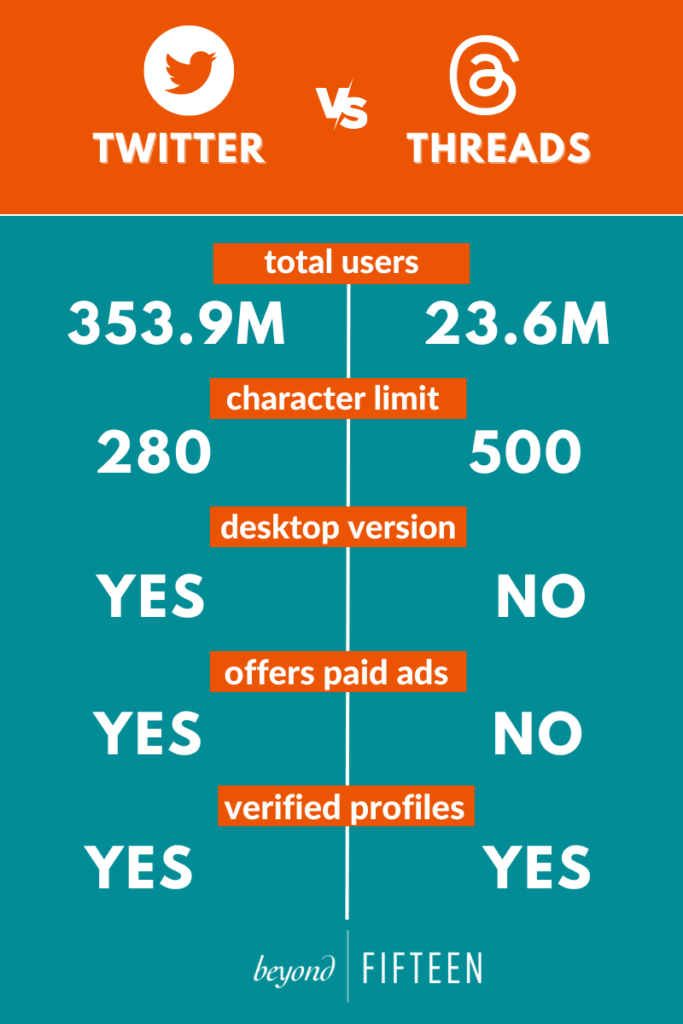
Our team has been abuzz after the launch of the Threads app, a dynamic social platform from Meta, the company behind Facebook and Instagram. Even though it’s brand new, the app is already making waves in the digital sphere. This new app garnered tens of millions of signups within its first few days – making it the fastest growing app of all time. On July 7th it had 49 million users, but just as quickly it has declined to roughly 23.6 million users on July 14th according to a new report from SimilarWeb. It also reported that in the U.S. engagement went from 21 minutes per day to just over six minutes during the same period.
So, is this new app worth the hype? Will it replace Twitter? And should your brand join? We’ve got answers to your most pressing questions!

What is Threads?
Threads is a text-based sharing app that is rooted in the Instagram ecosystem and was designed to be a competitor to Twitter. Those with an Instagram account can use their username and login to automatically create a Threads handle. The platform also offers an easy way for users to follow the same accounts on Threads that they are following on Instagram. This reduces any need to build an audience on the platform and immediately creates a personalized experience. Posts can be crosspromoted to Instagram stories, reaching your audience wherever they are spending their time. Those that want a Threads account and don’t have Instagram can create a profile on the photo-sharing platform and then subsequently create a Threads account. With so many similarities and in direct competition with Twitter, it is important to understand its key differences.How does it compare to Twitter?
Similar to Twitter, Threads allows users to post text-based messages or “threads,” while also enabling the sharing of photos and videos. Unlike Twitter, there is only one feed, where users will scroll through both trending and following posts. The character count is higher on Threads (up to 500), and the app also allows a larger number of multimedia attachments per post. The fusion of conversational dialogue and visual storytelling provides a powerful and engaging experience for users—especially those looking for an alternative to Twitter in the wake of recent changes. However, unlike Twitter, it does not have the capability to direct message, lacks a trending topics section and users cannot edit posts. Additionally, it is only available on mobile and there is no desktop version. The platform has been embraced by many globally recognized brands including Netflix, Lyft, Spotify and Pepsi, as it presents an opportunity for increased awareness, reach and engagement.